
Building an Inclusive Workforce

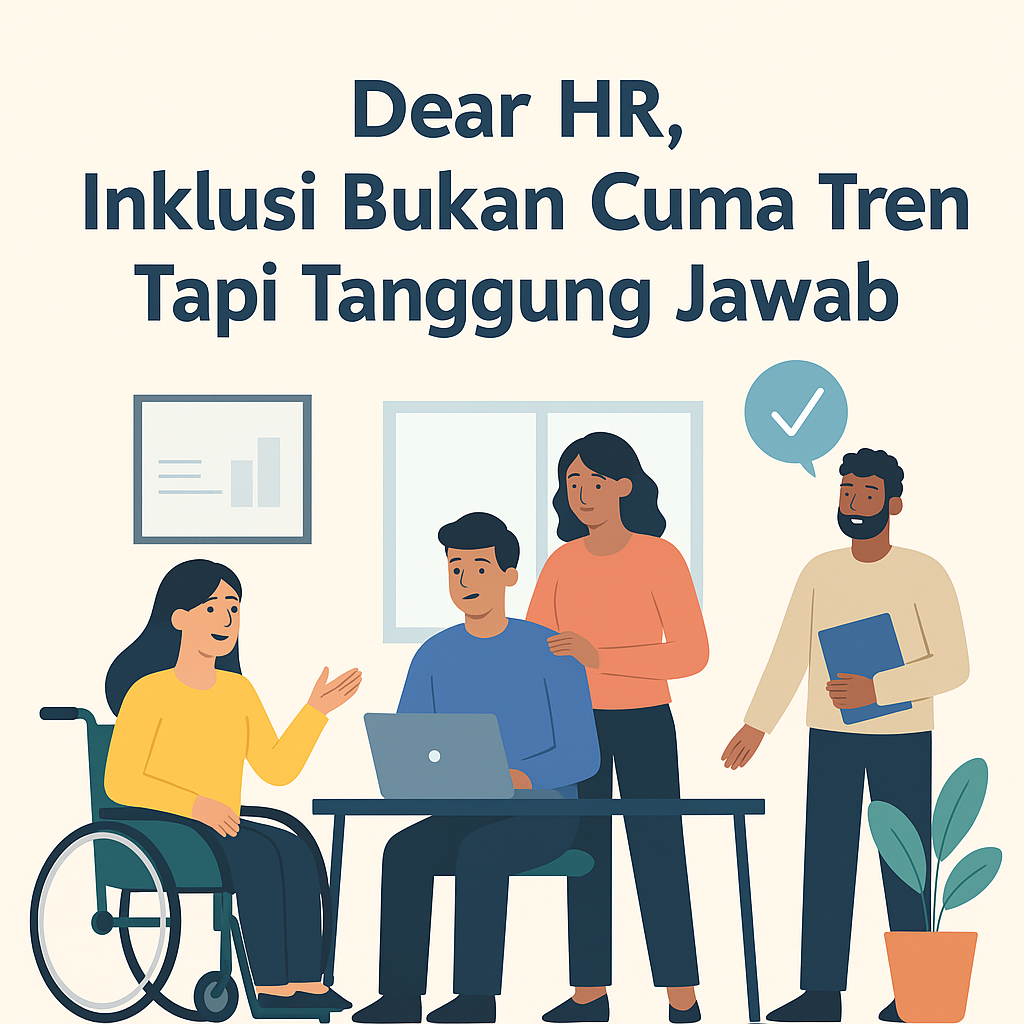
Inclusive employment has become an increasingly important issue in Indonesia. With growing awareness and stronger government policies, more organizations are realizing that hiring people with disabilities is not only a social responsibility but also a smart business move.
Creating an inclusive workplace leads to innovation, productivity, and a stronger sense of community.

Here are five key facts about how disability inclusion is shaping the future of work in Indonesia.

1. 1% Job Quota for Private Companies

According to Law No. 8 of 2016 on Persons with Disabilities, private companies with more than 100 employees are required to allocate at least 1% of their job positions for people with disabilities.
This regulation aims to ensure equal opportunity and demonstrate corporate commitment to diversity and inclusion.

2. 2% Job Quota for Government Institutions and State-Owned Enterprises

Public institutions and state-owned enterprises (SOEs) have a higher quota — they are required to provide at least 2% of job positions for people with disabilities.
This policy ensures that the public sector sets an example in promoting equality and inclusion in the workplace.

3. Employees with Disabilities Are Equally Productive and Loyal

Studies show that employees with disabilities are just as productive and loyal — if not more so — than their non-disabled peers.
Their resilience, problem-solving skills, and strong work ethic make them valuable assets for any inclusive organization.

4. Interviews Can Be More Flexible

Inclusion starts at recruitment. Job interviews can be conducted in different formats — written, via video, or with an assistant — as part of reasonable accommodation.
This ensures that every candidate has a fair opportunity to present their skills and potential.

5. Career Opportunities Across All Fields

People with disabilities can pursue careers in a wide range of industries, from hospitality and design to data analytics and information technology.
This shows that ability, not disability, defines one’s potential to succeed in the workplace.

Moving Toward a More Inclusive Future

Inclusive employment is not just a legal obligation — it’s a strategy for building a stronger, more empathetic, and sustainable workplace.
By creating opportunities for people with disabilities, companies can drive innovation, boost morale, and strengthen their social impact.

Let’s continue working together to build a future where everyone has the opportunity to grow, contribute, and succeed. 


DNetwork held its first Jobseekers Gathering event of the year on Thursday (12/3) in collaboration with Lokajaya Group. The participants consisted of 20 blind persons from across Bali who were keen to learn about public speaking, professions related to it, and everything about podcast production and marketing.

DNetwork’s favorite part of the event was when the participants worked in groups to simulate a radio station or podcast recording. Everyone showed their enthusiasm and creativity while learning so much from each other. It turned out that a couple of the participants had already started their own podcast. One of these participants is Dede. His podcast, which already has three episodes, is called Bali Blind Podcast and can be heard on Spotify.
 
"On the Bali Blind Podcast, I share information about disability-related matters, especially for the blind; from technology to other more casual stuff. Hopefully, the listeners find the podcast to be useful. I also hope more collaboration can be done in the next episodes," said Dede
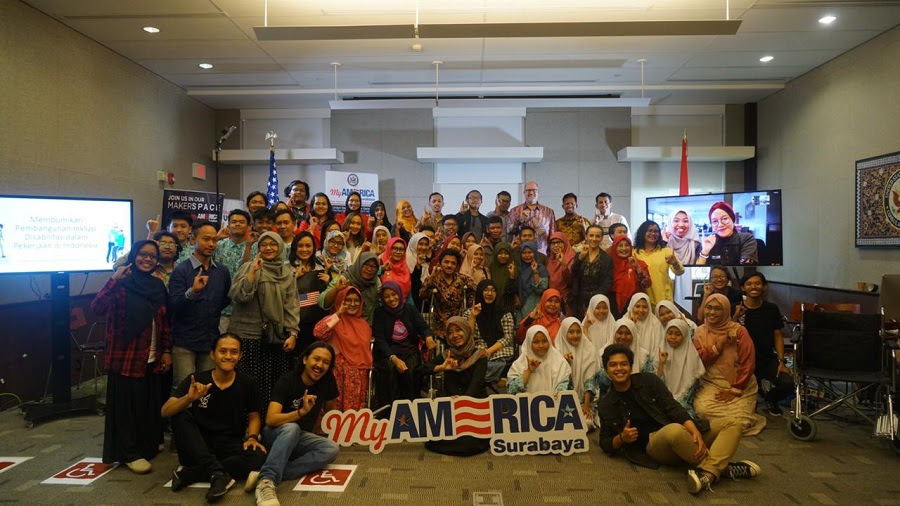
This isn’t the first time DNetwork has participated in a discussion on the disability employment sector. However, the discussion that took place last Wednesday (26/2) was quite different. DNetwork was involved in this discussion, which was held by the US Consulate General in Surabaya, through video conferencing technology. Therefore, without having to fly from Bali to Surabaya, the DNetwork team could join as one of panelists and share their ideas with the 70 discussion participants who were present there.
 
The discussion was opened by the United States Consul General, Mark McGovern, who stated that he fully supports all efforts to increase inclusion in society, including in the workforce. During this discussion, the DNetwork team shared the virtual panel with two disability rights activists; Fira Fitri Fitria and Anjas Pramono. Fira is a journalist who is actively campaigning for anti-discrimination in the workspace through journalism, while Anjas is the initiator of the Activist Forum of Student Inclusion, also an Android-based application developer for people with disabilities.

On January 27, DNetwork in collaboration with the Marriott Bali Business Council held barista training for persons with disabilities at the Fairfield by Marriott Bali Kuta Sunset Road hotel. The training, which lasted around three hours, provided the participants with the basic theory of espresso-based coffee making. Participants also learnt how to use a coffee machine; starting from the process of grinding coffee beans, making various types of coffee, to machine maintenance.
 
It was very interesting to talk to the participants about the reasons why they attended this training. For some, their motivation was based on their love for coffee. Bagus, for example, one of the participants who came with his parents, considered himself a coffee connoisseur and aspired to establish his own coffee shop. Meanwhile, three students of SLB Negeri 2 Denpasar (Special Needs School) stated that they were motivated to take part in the training because they often go to the coffee shop with friends and were curious about the production process of the beverages they usually order.
 
This training is one of many that will be held by DNetwork throughout 2020, in collaboration with various organizations, communities, and companies. The whole series of training is intended to introduce people with disabilities to a broad scope of work so that they can explore and identify their interests and talents.

On Friday 20th December, DNetwork celebrated its 6th birthday at the Annika Linden Centre with a group discussion that explored what the organization can do in the future to make an even greater contribution towards people with disabilities. Around 20 participants attended the event, including representatives of the Bali Deaf Community (BDC), the Movement for Indonesian Deaf Welfare (Gerkatin), and the Indonesian Blind Association (Pertuni).
 
The results of the discussion had a major impact on DNetwork’s start to 2020. DNetwork has prepared several new programs related to the disability workforce sector, including a volunteer program that aims to open more opportunities for the general public who want to help out with DNetwork’s programs in various cities. Volunteers can help DNetwork hold educational events while also facilitating the connection between DNetwork and companies.